


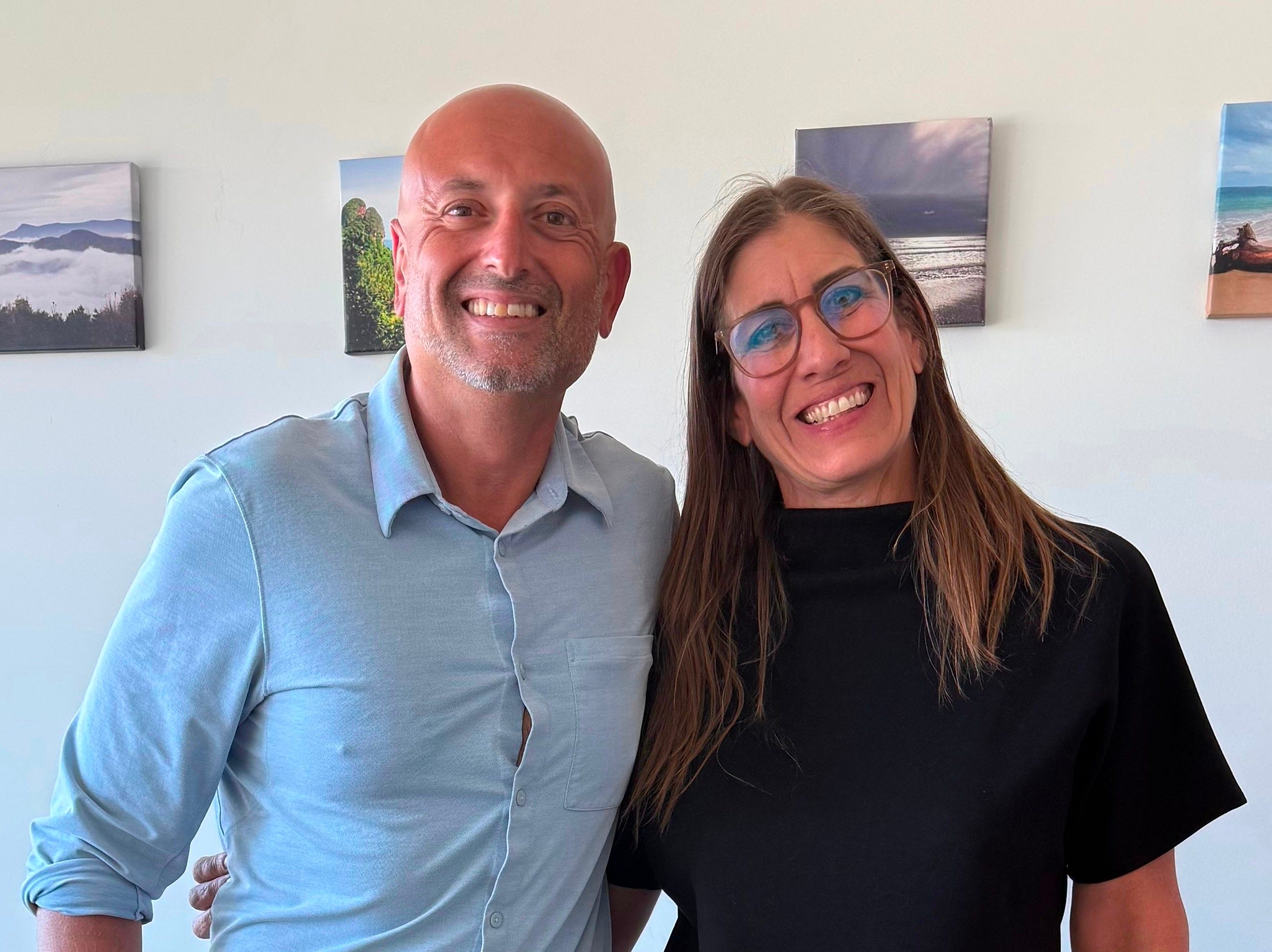
I recently traveled to San Diego to visit Fadel Zeidan, PhD, a professor at the University of California campus there, where towering eucalyptus trees scent the balmy ocean air. I wanted to learn about a pilot study Fadel just conducted testing the feasibility of using psilocybin, the active psychedelic ingredient in magic mushrooms, to treat phantom limb pain.
What is phantom limb pain?
If you’ve never heard of phantom limb, it’s the phenomenon that makes amputees feel as if their missing limb is still there. For most, that includes sensations of burning, stabbing, and electrical pain. So how can we feel pain from an appendage that no longer exists?
Pain arises in the brain, and it’s the brain that creates these phantom sensations – these convictions, even – that a missing arm still hurts. That pain is no less “real” than an injury to an arm that does exist. But here’s the thing: pain is not created entirely by the brain – not even phantom limb pain.
In my experience as a researcher, a journalist and a person living with chronic pain, the science just doesn’t support the idea that the brain can make up pain out of thin air, or even out of a past traumatic experience or memory. There’s always some sort of biological trigger; usually in the body, but not always. That’s what we call a pain generator.
So where does the pain come from?
In the case of phantom limb pain, and many other types of neuropathic pain, the pain generator is the sensory nerve that’s been cut or damaged. It has to do with our sensory system anatomy. You see, all of the nerve cells, or neurons, that sense our physical environment actually live in little pockets outside the spinal cord, and each cell sends a long axon out to the body, like a specialized feeler that collects sensory information. Hundreds or thousands of those long axons travel out to the body together in bundles we call nerves.
When an arm is amputated, those nerves, those long axons, are cut. But the sensory neurons are not gone or dead. In fact, research has shown that damaged nerves can become overactive, generating spontaneous sensations of pain – in this case from a limb that’s no longer there. A 2014 study showed that phantom limb pain does in fact originate from these peripheral nerves, when researchers injected amputees with lidocaine, a local anesthetic that silences sensory neurons, either in the spinal cord or at the dorsal root ganglia (DRG), those little pockets containing the sensory cells. The result: patients no longer felt pain or in fact any other sensation from their phantom limb. (Unfortunately that’s not a viable treatment option.) So while brain networks do undergo reorganization in response to amputation, and the brain does in fact create the complex experience of pain, it doesn’t create pain in the absence of a pain generator.
What Fadel is finding
Now, all of that is the backdrop for a podcast episode we’re putting together about how the brain creates pain from those aberrant signals. In Fadel’s small pilot study, five amputees took psilocybin and four took a placebo. Two and four weeks later, the psilocybin group - but not participants receiving placebo — reported significant reductions in phantom pain. It’s a small, early study, and Fadel is the first to say it’s not a silver bullet. But he’s now running a larger trial.
Fadel’s work, which has also examined mindfulness and meditation in the context of pain, provides new insights as to how we humans interpret that activity, and how it leads to suffering, which is not the same as pain. In both the patients taking psilocybin and in meditators from other studies, brain scans showed quieter activity in the default mode network, a set of regions that are active when we turn inward, ruminating and thinking about ourselves. It’s a fascinating new way of looking at how we can shift brain activity to suffer less. Even if the pain generator is still squawking, we have tremendous power to shape our experience of pain.
I can’t wait for you to hear the full episode.
A postcard from San Diego
Which brings me back to San Diego. Who doesn’t love San Diego? I know I sure do. Living in the Los Angeles area, I’ve had the chance to visit our fair neighbors to the south many times – although I’ll admit, most of that has been inside the halls of the convention center and hotels at neuroscience conferences. On this reporting trip though, I took the opportunity to visit college campuses with my teen daughter, who’s off to college next year. I also attended the wedding of a lab-mate from grad school. It was so cool to see a bunch of “kids” that I knew back in the ‘90s in Portland, Oregon, during grad school, and see where everyone has landed. The back-yard wedding took place on the edge of one of San Diego’s countless suburban canyons. An owl perched on the bloom of a century plant as the sun set and the full moon rose. Conversations ranged from astronomy to cancer biology to ion channels and European history. As one old friend put it lovingly, “What I love about this party is that there are so many different kinds of nerds here!” True story, and we relished each other’s nerdy company.
But I digress. If you or someone you love has suffered with phantom pain, hit reply or leave a comment. We’d love to hear from you. And we’ll let you know when the episode is ready to drop. It’ll be sometime in early 2027.